How to Create a Florist Delivery Area
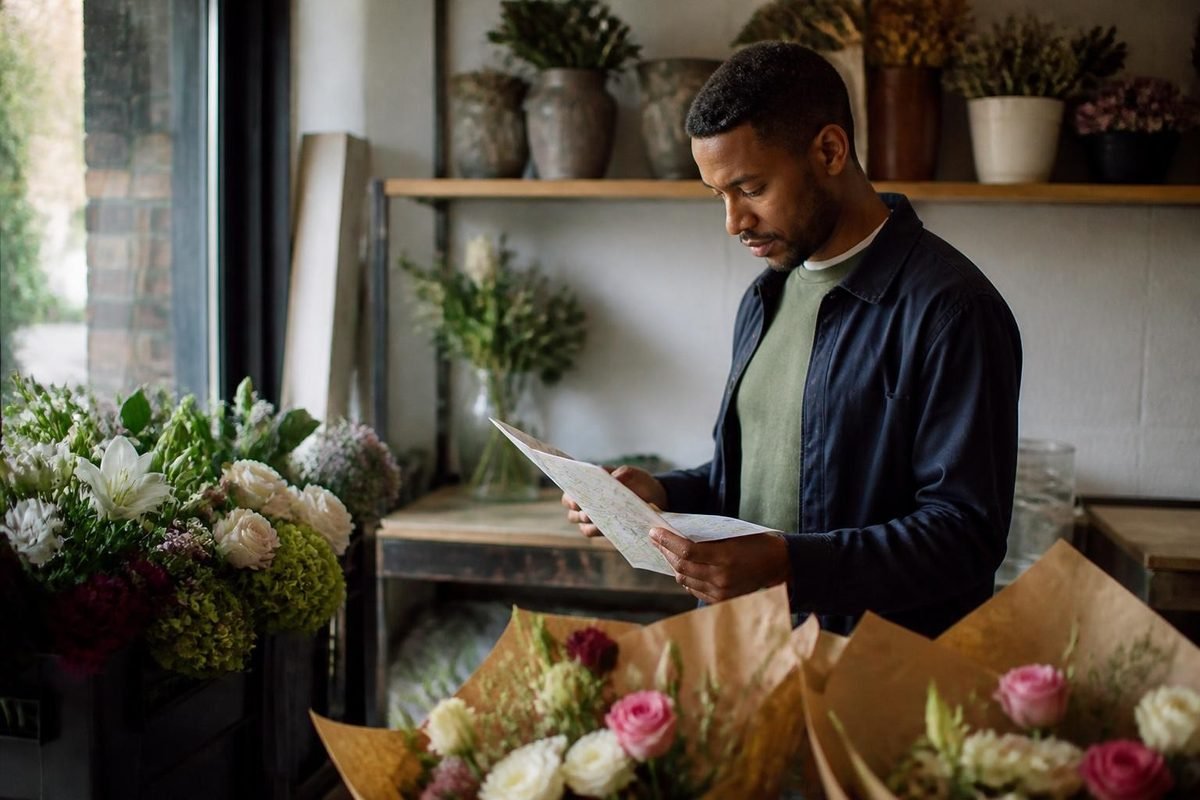
Create a florist delivery area by mapping the places you can reach reliably with the drivers, vehicles, and time you have. Set clear boundaries and delivery rules, then adjust them as you learn which routes work.
Start with your delivery capacity
Work out how many deliveries you can make in a day without rushing the flowers or missing promised times. Consider the number of drivers and vehicles available, the time needed to prepare each order, and the hours you can spend on the road.
Allow time at each stop to find the address, park, hand over the flowers, and deal with a recipient who is not home. A route with several stops close together can take less time per order than a single trip to an outlying address.
Map a workable boundary
Use a map to mark your starting point and the neighborhoods you can reach within a practical drive. Travel time matters more than distance alone. A nearby address across a congested bridge may take longer to serve than a more distant address on a clear road.
Check likely routes at the times you plan to deliver. Note traffic, parking restrictions, and places that are difficult to access. You can define the area using postal codes, towns, neighborhoods, or a combination, but check the edges carefully. A postal code may cover a larger area than you expect.
Set delivery zones and rules
Divide the area into zones if some destinations need more travel time or different schedules. Keep the rules simple enough for customers and staff to understand.
- List the places or postal codes you serve in each zone.
- Set delivery days and order deadlines for each zone.
- Decide which delivery fees apply and explain them before checkout.
- Define any limits on timed deliveries and special requests.
- Set a process for incorrect addresses and unsuccessful deliveries.
Make sure your order form or staff can check an address against the boundary before accepting an order. If an address is close to the edge, check the actual route rather than guessing.
Plan routes around the flowers
Flowers need stable conditions and secure placement in the vehicle. Plan routes so arrangements spend as little time as practical in transit, especially in hot or cold weather. Keep them upright and protected from direct sun and temperature extremes.
Group nearby stops where possible, while allowing for any promised delivery windows. Leave room in the schedule for delays. If a route regularly makes those promises hard to keep, reduce the area or offer a wider delivery window.
Review the area as orders come in
Keep a simple record of destinations, drive times, missed deliveries, and customer requests from outside the boundary. Look for areas with enough orders to make a route practical and places that repeatedly cause delays.
Review the boundary when staffing, traffic, or order volume changes. Seasonal peaks may call for different deadlines or a smaller area if capacity is tight.
A useful delivery area is one you can explain clearly and serve consistently.
Take a look at first hours of cut flower care
Corrections
Spot something wrong? Send it to the desk and it gets fixed in the open.